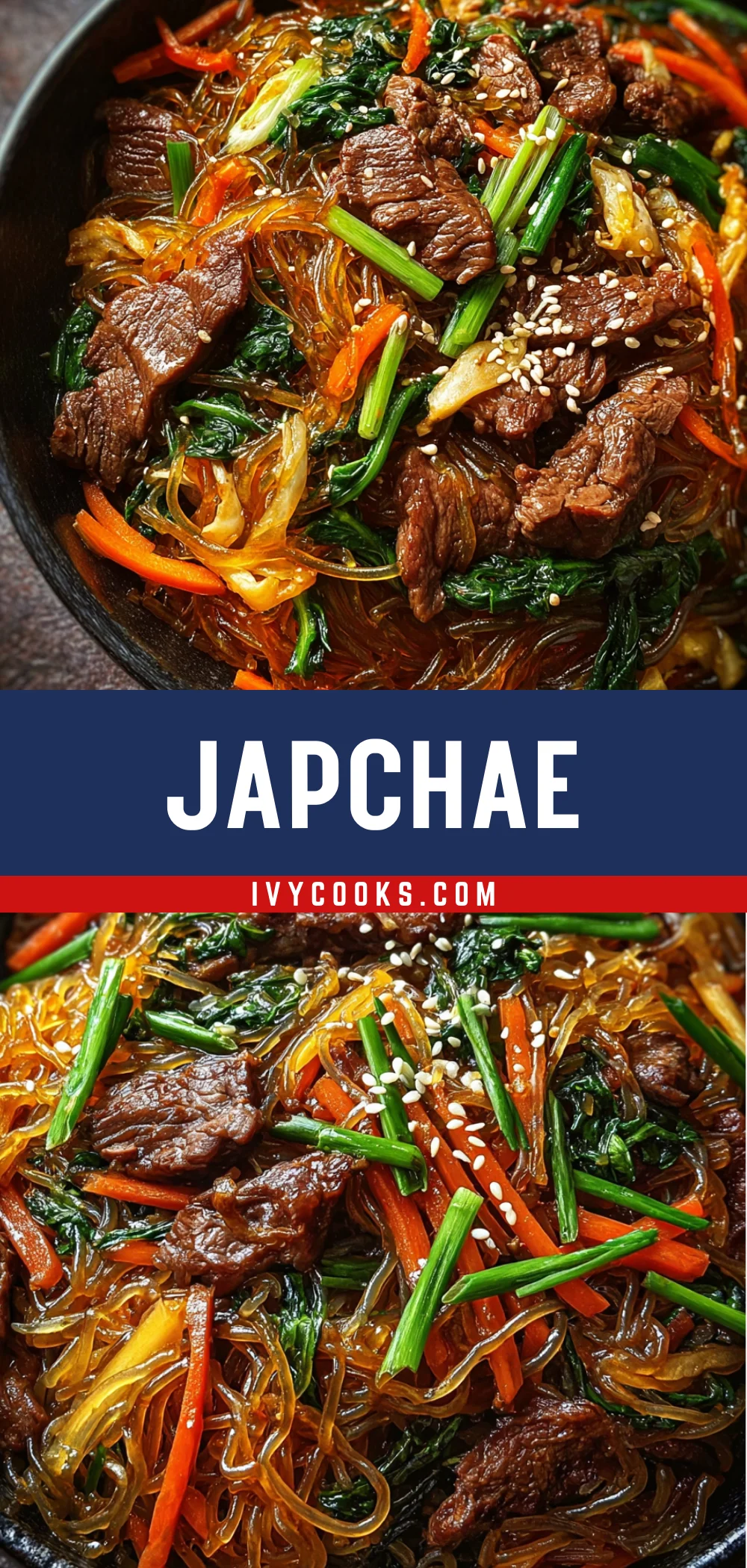
Japchae
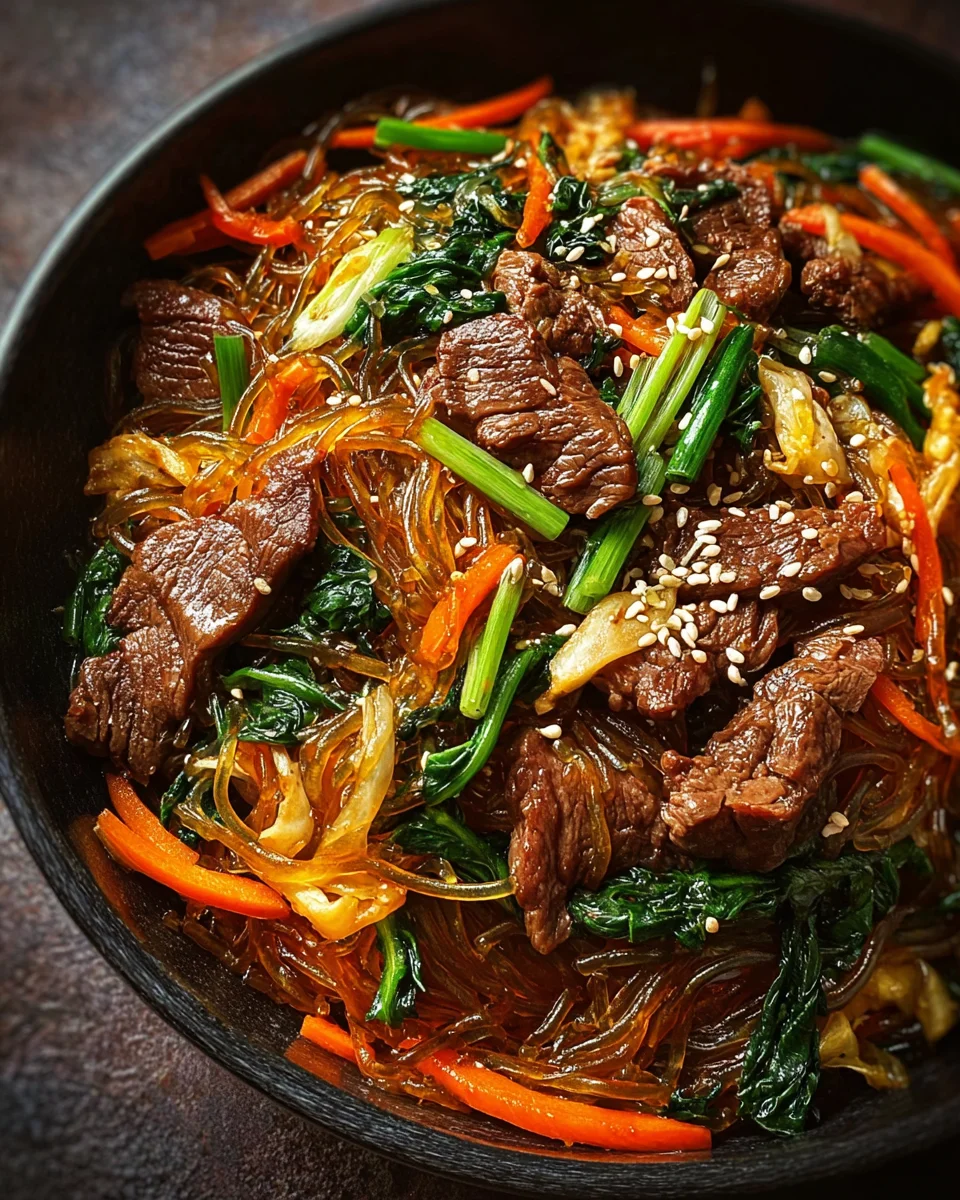
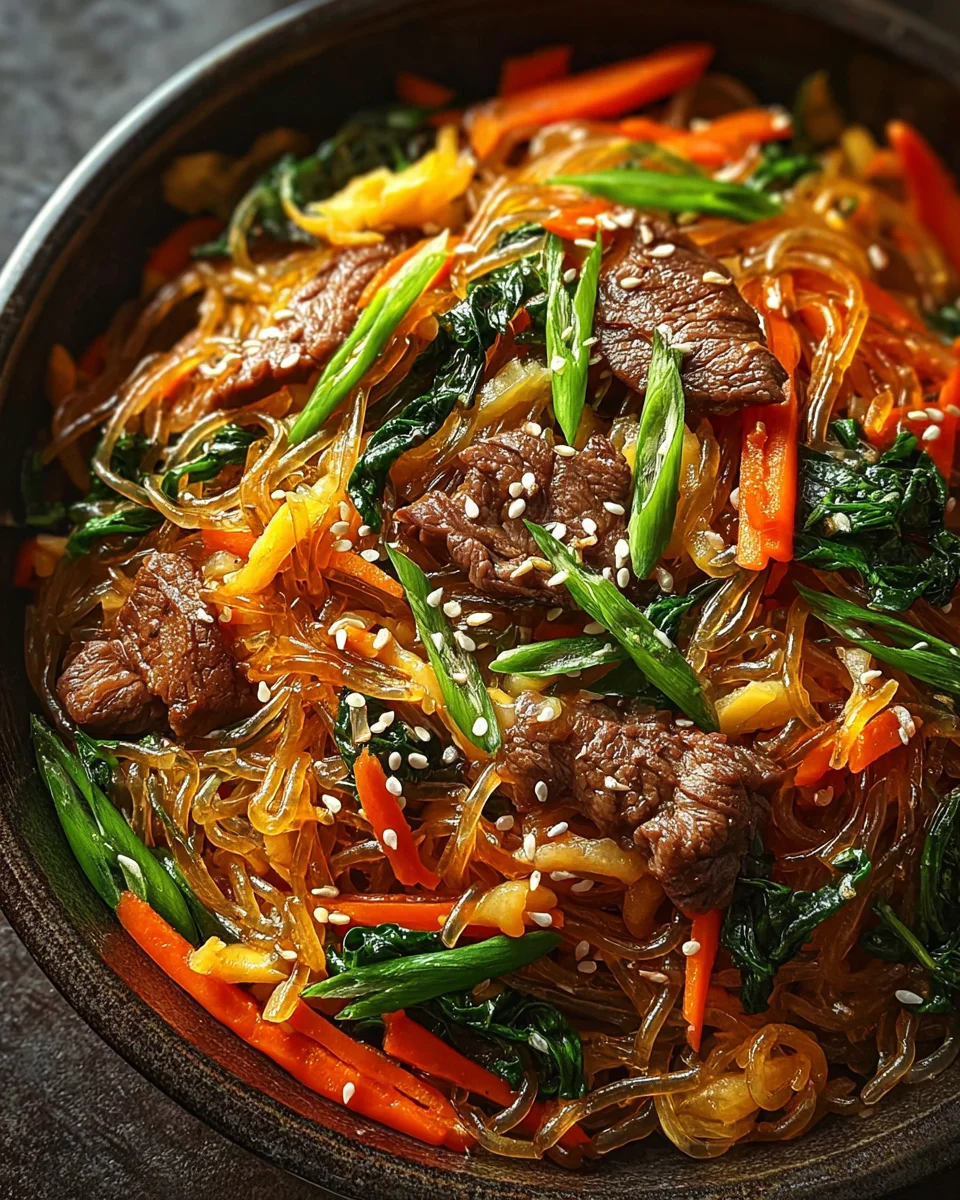
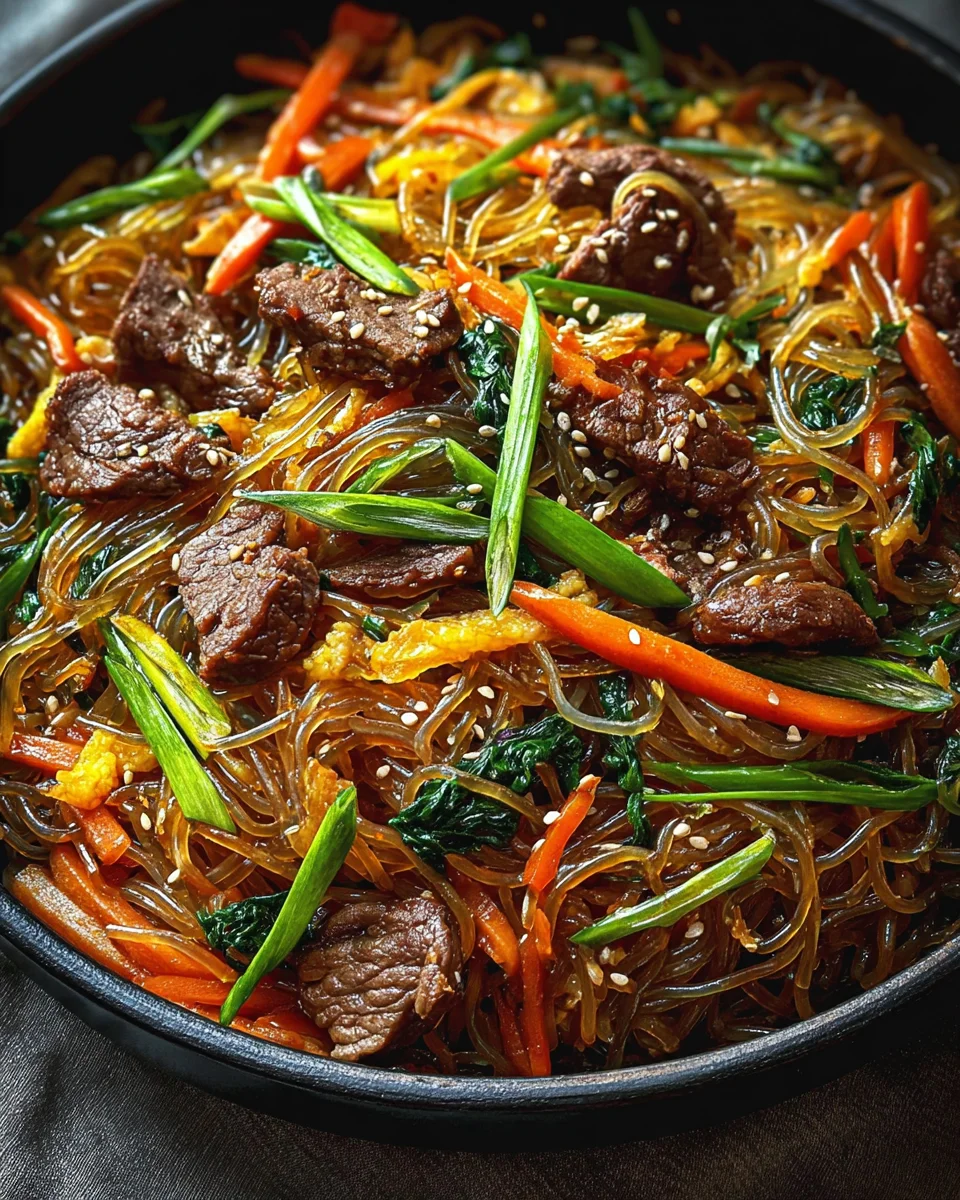
Japchae is a delightful Korean dish that brings together chewy sweet potato glass noodles and a medley of tender vegetables and savory meat. Its unique combination of flavors makes it perfect for family gatherings, special occasions, or a comforting weeknight dinner. Whether you choose beef, chicken, tofu, or shrimp, this dish is versatile and satisfying, making it a favorite for many.
Why You’ll Love This Recipe
- Easy to Prepare: Japchae comes together in just about an hour, making it an excellent choice for quick meals.
- Flavorful: The blend of soy sauce and sesame oil gives this dish a rich, savory taste that’s hard to resist.
- Versatile: You can easily customize japchae with your choice of protein or even go vegetarian by using only vegetables.
- Colorful Presentation: The vibrant mix of carrots, spinach, and green onions makes for an eye-catching dish that impresses at any table.
- Perfect for Meal Prep: Japchae stores well in the fridge, making it ideal for leftovers or meal prepping.
Tools and Preparation
Before diving into the delicious details of how to make japchae, there are a few essential tools you’ll need. These will help streamline your cooking process and ensure everything turns out perfectly.
Essential Tools and Equipment
- Large pot
- Skillet
- Cutting board
- Knife
- Mixing bowl
Importance of Each Tool
- Large pot: Necessary for boiling the sweet potato noodles evenly without overcrowding.
- Skillet: Essential for stir-frying the meat and vegetables quickly over high heat.
- Cutting board: Provides a safe surface for chopping your ingredients efficiently.
- Knife: A sharp knife helps to achieve precise cuts on vegetables, enhancing both texture and presentation.
Ingredients
This classic Korean stir-fried noodle dish features chewy sweet potato glass noodles tossed with tender beef, colorful vegetables, and a savory-sweet blend of soy sauce and sesame oil. It’s easy to customize with chicken, tofu, or shrimp, and its vibrant flavors make it perfect for gatherings or a cozy dinner at home.
The Salad Bowls Amazon Chose and Customers Love!
For the Protein
- 2 lb thin-sliced beef (or chicken, tofu, or shrimp)
For the Noodles
- 1 lb Korean sweet potato noodles (glass noodles / dangmyeon)
For the Vegetables
- 3 medium carrots, julienned
- 1 large white onion, thinly sliced
- 1/2 bunch green onions, chopped
- 6 garlic cloves, minced
- 1/2 lb spinach leaves
For the Sauce
- 4 tablespoons sesame oil (divided)
- 1 tablespoon olive oil
- 6 tablespoons soy sauce (or tamari)
- 3 tablespoons brown sugar
How to Make Japchae
Step 1: Cook the Noodles
- Bring a large pot of water to a boil and add a drizzle of olive oil.
- Cook the sweet potato noodles for 5–6 minutes until they are chewy but not mushy.
- Drain the noodles and set them aside.
Step 2: Prepare the Beef
- In a skillet over high heat, cook the beef until browned.
- Season with half of the soy sauce, half the sesame oil, and half the brown sugar.
- Set aside once cooked.
Step 3: Stir-Fry the Vegetables
- In another skillet, heat olive oil over medium-high heat.
- Add julienned carrots and sliced onion. Cook until softened.
- Stir in remaining soy sauce, sesame oil, brown sugar, garlic, and green onions. Cook for 1 minute.
Step 4: Add Spinach
- Incorporate the spinach into the skillet with vegetables.
- Cook until wilted.
Step 5: Combine Everything
- In a large mixing bowl, combine cooked noodles with beef and vegetable mixture.
- Toss well until everything is evenly coated with sauce.
Step 6: Serve
Serve warm garnished with additional green onions if desired. Enjoy your homemade japchae!
How to Serve Japchae
Japchae is a versatile dish that can be enjoyed in various ways. Whether you’re hosting a gathering or having a quiet dinner at home, these serving suggestions will elevate your experience with this delicious Korean noodle dish.
Serve as a Main Dish
- Pair japchae with steamed rice for a hearty meal that balances the flavors of the noodles and vegetables.
- Enjoy it on its own for a light yet satisfying option.
Garnish with Fresh Ingredients
- Top japchae with chopped green onions to add color and freshness.
- Include sesame seeds for an extra crunch and nutty flavor.
Create a Japchae Platter
- Serve japchae alongside Korean side dishes (banchan) like kimchi, pickled radish, and seasoned spinach for an authentic experience.
- Arrange colorful vegetables around the dish to make it visually appealing.
Add Proteins
- Enhance your japchae by adding grilled chicken or shrimp on top for added protein and flavor.
- Offer sliced tofu as a vegetarian option for guests looking for plant-based choices.
How to Perfect Japchae
Creating perfect japchae involves attention to detail and technique. Here are some tips to ensure your dish turns out amazing every time.
- Use fresh ingredients: Fresh vegetables not only taste better but also add vibrant colors to your dish.
- Soak noodles properly: Make sure to soak sweet potato noodles in hot water before cooking them to achieve the right texture.
- Don’t overcook vegetables: Keep them slightly crunchy to maintain their fresh flavor and texture.
- Balance flavors: Adjust soy sauce and sugar levels according to your taste preference for the perfect savory-sweet blend.
- Mix well: Toss all ingredients together thoroughly so that each noodle is coated in the flavorful sauce.
- Serve immediately: For the best taste, enjoy your japchae right after cooking while it’s still warm.
Best Side Dishes for Japchae
Pairing side dishes with japchae can enhance your meal experience. Here are some excellent options to consider:
- Kimchi: A staple in Korean cuisine, kimchi adds a spicy kick that complements the flavors of japchae.
- Pickled Radish: This refreshing side provides a crunchy contrast and helps cleanse the palate between bites.
- Seasoned Spinach (Sigeumchi Namul): A lightly seasoned spinach side is nutritious and pairs well with the rich flavors of japchae.
- Korean Potato Salad: Creamy and mildly sweet, this salad offers a delightful contrast to the savory noodles.
- Cucumber Salad (Oi Muchim): A tangy cucumber salad adds brightness and crunch, balancing out the heaviness of the main dish.
- Fried Tofu Bites: These crispy tofu bites provide additional protein while being light enough not to overpower the main dish.
- Seaweed Salad: This refreshing salad offers an umami flavor that beautifully complements the sweet potato noodles.
- Rice Cakes (Tteokbokki): Spicy rice cakes bring heat and texture, making them a fun addition to your meal spread.
Common Mistakes to Avoid
Making Japchae can be a delightful experience, but there are common mistakes that can hinder your dish’s success. Here are some pitfalls to watch out for:
- Overcooking the noodles: Cooking sweet potato noodles too long can lead to mushy textures. Follow the package instructions closely for the best results.
- Neglecting ingredient prep: Not slicing vegetables uniformly can affect cooking time and presentation. Take time to julienne and slice ingredients properly before cooking.
- Skipping seasoning: Under-seasoning can leave your Japchae bland. Ensure you incorporate enough soy sauce and sesame oil for depth of flavor.
- Ignoring the order of ingredients: Adding ingredients out of order can lead to uneven cooking. Cook proteins first, followed by harder vegetables, and finish with greens.
- Not tossing thoroughly: Failing to mix everything well can result in uneven flavor distribution. Toss the noodles, beef, and veggies until all ingredients are well combined.
Storage & Reheating Instructions
Refrigerator Storage
- Store leftover Japchae in an airtight container.
- It will keep well in the fridge for up to 3 days.
Freezing Japchae
- Freeze Japchae in a freezer-safe container for longer storage.
- It can last up to 2 months in the freezer.
Reheating Japchae
- Oven: Preheat to 350°F (175°C) and bake covered for about 15 minutes until heated through.
- Microwave: Heat in short bursts, stirring occasionally, until warm. Use a microwave-safe dish with a lid.
- Stovetop: Reheat in a skillet over medium heat, adding a splash of water or sesame oil if needed.
Frequently Asked Questions
What is Japchae?
Japchae is a traditional Korean stir-fried noodle dish made from sweet potato glass noodles tossed with meat, vegetables, and savory seasonings.
How can I customize my Japchae?
You can easily customize Japchae by substituting beef with chicken, tofu, or shrimp. Add any vegetables you like for unique flavors!
Can I make Japchae ahead of time?
Yes! You can prepare Japchae ahead of time and store it in the refrigerator or freezer. Just reheat before serving.
Is Japchae healthy?
Japchae is relatively healthy as it includes fresh vegetables and lean protein. Adjust oil and sugar amounts for a lighter version.
Final Thoughts
This Japchae recipe offers incredible versatility and vibrant flavors that everyone will love. Whether you enjoy it as a main dish or side, feel free to customize it with your favorite proteins and veggies. Give this delightful dish a try—you won’t be disappointed!

Japchae
- Total Time: 45 minutes
- Yield: Serves approximately 6 people 1x
Description
Japchae, a beloved Korean stir-fried noodle dish, combines chewy sweet potato glass noodles with a colorful array of vegetables and your choice of protein. This delightful recipe is not only quick to prepare but also bursting with flavors from soy sauce and sesame oil, making it an ideal option for family dinners, gatherings, or meal prep. Whether you prefer beef, chicken, tofu, or shrimp, Japchae is versatile and satisfying, offering a rich culinary experience that everyone will enjoy.
Ingredients
- 2 lb thin-sliced beef (or chicken, tofu, or shrimp)
- 1 lb Korean sweet potato noodles (glass noodles)
- 3 medium carrots, julienned
- 1 large white onion, thinly sliced
- 1/2 bunch green onions, chopped
- 6 garlic cloves, minced
- 1/2 lb spinach leaves
- 4 tablespoons sesame oil (divided)
- 1 tablespoon olive oil
- 6 tablespoons soy sauce
- 3 tablespoons brown sugar
Instructions
- 1. Cook the sweet potato noodles in boiling water with olive oil for 5–6 minutes until chewy. Drain and set aside.
- 2. In a skillet over high heat, cook the beef until browned. Season with half of the soy sauce, sesame oil, and brown sugar. Set aside.
- 3. Stir-fry julienned carrots and onion in another skillet with olive oil until softened. Add remaining soy sauce, sesame oil, brown sugar, garlic, and green onions; cook for an additional minute.
- 4. Mix in spinach until wilted.
- 5. Combine cooked noodles with beef and vegetable mixture in a large bowl; toss well to coat.
- 6. Serve warm garnished with additional green onions if desired.
- Prep Time: 15 minutes
- Cook Time: 30 minutes
- Category: Main
- Method: Stir-frying
- Cuisine: Korean
Nutrition
- Serving Size: 1 cup (200g)
- Calories: 350
- Sugar: 5g
- Sodium: 680mg
- Fat: 15g
- Saturated Fat: 3g
- Unsaturated Fat: 10g
- Trans Fat: 0g
- Carbohydrates: 45g
- Fiber: 4g
- Protein: 20g
- Cholesterol: 70mg
The Casserole Dish Thousands of Families Can't Cook Without!